Listen Quran
RAMADAN EID AND PROPHET MUHAMMAD (PBUH)
It was the day of celebration and a day of rejoicing. There was an air of festivity in the streets of Madinah. All the people, both young and old were dressed in their best clothes, especially for this special day of Ramadan (Ramadan) Eid.
As it was time for early morning Ramadan (Ramadhan) Eid prayers everyone made their way to an open piece of land on the outskirts of the city of Madina. The Prophet Muhammad (pbuh) arrived and led the prayers. After they had finished they all greeted each other and everyone was walking back home. The children running and playing in excitement, smiling and laughing, without a care in the world.
As the Prophet Muhammad (pbuh) walked back home, he suddenly became aware of a little boy (Zuhair Bin Saghir) sitting by himself on the side of the path. The little boy was crying and looked very sad. The Prophet Muhammad (pbuh) bent down and patted him on the shoulders and asked 'why are you crying?' 'Please leave me alone' sobbed the little boy. The boy didn't even see who was talking to him. The Prophet Muhammad (pbuh) ran his fingers through the boy's hair and very gently and kindly asked him again why he was crying. This time the boy said, 'My father was martyred fighting, and now my mother has married again and my stepfather does not want me to live at home any more. Today is Ramadan (Ramadhan) Eid and everyone is happy. All the children have new clothes and nice things to eat, but I don't have any clothes except what I am wearing. I have no food and I don't even have a place to live.
The Prophet Muhammad (pbuh) said to him, 'I know how you feel, I lost both my mother and father when I was a little boy.' The boy was surprised to hear that it was an orphan who was comforting him, and when he looked up to his great surprise it was the Prophet Muhammad (pbuh), and he immediately jumped up to his feet out of love and respect.
The Prophet Muhammad (pbuh) said to him 'If I were to become your new father and my wife you new mother, and my daughter your new sister, would that make you feel better?' 'Oh yes, that would be the best thing in the world!' The boy started smiling. The Prophet Muhammad (pbuh) took him home and gave him new clothes and good food on this beautiful day of Ramadan (Ramadhan) Eid. The boy indeed had a wonderful Ramadan (Ramadhan) Eid that day.
Moral: We should think of others that are less fortunate than ourselves on this beautiful day of Ramadan (Ramadhan) Eid. Not everyone has such a wonderful day. It is a day of celebration, but take a moment to stop and think of those who are less fortunate than ourselves by following the Sunnah of our Prophet Muhammad (pbuh). Read More!
Duties of Muslim in Ramadhan
Ramadan, the month “in which the Holy Qur’an was sent down as a guide to mankind and as clear (signs) for guidance and judgment between right and wrong.” This month calls upon us, yet again, to reflect on our lives and judge for ourselves to what extent we have lived, and live, by the Divine Guidance.
True, we observe fast and attend night prayers. But do we, in the 11 interposing months, remember that while the fasting is “for a fixed number of days,” the spirit of self-discipline and the sense of mission that it is meant to instill in us are for the lifetime? And are we looking forward to this Ramadan as a new opportunity to recommit ourselves to a meaningful life, or as another yearly opportunity to relapse into a month of zombie days and gastronomic nights while deluding ourselves that we are pious?
The Qur’an is quite specific about what fasting is for. It is neither to punish the body with thirst and hunger nor to indulge it with fat and sloth. “O ye who believe! Fasting is prescribed to you as it was prescribed to those before you, that ye may have taqwa.” Authentic commentators have translated the comprehensive word “taqwa” as “self-restraint” in its widest sense of guarding one’s tongue, hand and heart from evil and, hence it denotes righteousness, piety and good conduct.
Fasting and special prayers are an important part of Ramadan, defined as they are as our obligations to our Creator and Sustainer. Equally important are the duties He has placed on us as obligations to our fellow men and other living beings that share this planet with us and to the planet itself — the environment, water, air, vegetation and other bounties of nature. Ramadan is the time when we must rededicate ourselves to one of the basic principles of Islam — “Render unto each his due”: To the One God His due — worship to Him alone, and to His creations their due — their rights.
The test is: Have we been becoming, with every passing Ramadan, more conscious of our obligations to render these dues? Living in a society we acquire obligations — as parents or children, wives or husbands, neighbors or colleagues, employers or employees, rulers or ruled, compatriots or aliens, superiors or subordinates.
Beginning a verse with “It is not righteousness that ye turn your faces toward East or West,” the Qur’an defines righteousness as, among others, “... to spend your sustenance, out of love for Him, for your kin, for orphans, for the needy, for the wayfarer, for those who ask and for the freedom of slaves” and closes it with “(and) fulfill the contracts which ye have made.... Such are the people of truth, the God-fearing.”
An honest review will tell most of us that, the worst of our failures in every Ramadan have been our failure to “fulfill the contracts we have made” — specifically or by assumption — as citizens, public officials, employers, employed, or ordinary men and women.
We should remember that for the Prophet (peace be upon him) and his companions, Ramadan was a month of action, of fulfilling obligations — to their Lord and to their fellow creations. It cannot be anything less for us, if we hope to be “the People of Truth, the God-fearing.”
May Allah help us make it so.
Read More!
True, we observe fast and attend night prayers. But do we, in the 11 interposing months, remember that while the fasting is “for a fixed number of days,” the spirit of self-discipline and the sense of mission that it is meant to instill in us are for the lifetime? And are we looking forward to this Ramadan as a new opportunity to recommit ourselves to a meaningful life, or as another yearly opportunity to relapse into a month of zombie days and gastronomic nights while deluding ourselves that we are pious?
The Qur’an is quite specific about what fasting is for. It is neither to punish the body with thirst and hunger nor to indulge it with fat and sloth. “O ye who believe! Fasting is prescribed to you as it was prescribed to those before you, that ye may have taqwa.” Authentic commentators have translated the comprehensive word “taqwa” as “self-restraint” in its widest sense of guarding one’s tongue, hand and heart from evil and, hence it denotes righteousness, piety and good conduct.
Fasting and special prayers are an important part of Ramadan, defined as they are as our obligations to our Creator and Sustainer. Equally important are the duties He has placed on us as obligations to our fellow men and other living beings that share this planet with us and to the planet itself — the environment, water, air, vegetation and other bounties of nature. Ramadan is the time when we must rededicate ourselves to one of the basic principles of Islam — “Render unto each his due”: To the One God His due — worship to Him alone, and to His creations their due — their rights.
The test is: Have we been becoming, with every passing Ramadan, more conscious of our obligations to render these dues? Living in a society we acquire obligations — as parents or children, wives or husbands, neighbors or colleagues, employers or employees, rulers or ruled, compatriots or aliens, superiors or subordinates.
Beginning a verse with “It is not righteousness that ye turn your faces toward East or West,” the Qur’an defines righteousness as, among others, “... to spend your sustenance, out of love for Him, for your kin, for orphans, for the needy, for the wayfarer, for those who ask and for the freedom of slaves” and closes it with “(and) fulfill the contracts which ye have made.... Such are the people of truth, the God-fearing.”
An honest review will tell most of us that, the worst of our failures in every Ramadan have been our failure to “fulfill the contracts we have made” — specifically or by assumption — as citizens, public officials, employers, employed, or ordinary men and women.
We should remember that for the Prophet (peace be upon him) and his companions, Ramadan was a month of action, of fulfilling obligations — to their Lord and to their fellow creations. It cannot be anything less for us, if we hope to be “the People of Truth, the God-fearing.”
May Allah help us make it so.
Daily Ramadan Duas 1 to 30
-: Special Note :- It is not compulsory to pray each Dua on specific day. You can also pray any Dua on any day. Even if you don't pray these Duas nothing harm for you. |
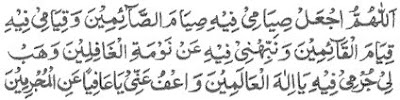
Ramadan Dua: DAY 1 |
![]() |
ALLAH, on this day make my fasts the fasts of those who fast (sincerely), and my standing up in prayer of those who stand up in prayer (obediently), awaken me in it from the sleep of the heedless, and forgive me my sins , O God of the worlds, and forgive me, O one who forgives the sinners. |
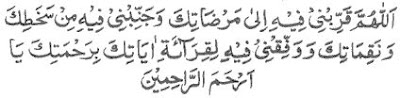
Ramadan Dua: DAY 2 |
![]() |
ALLAH, on this day, take me closer towards Your pleasure, keep me away from Your anger and punishment, grant me the opportunity to recite Your verses (of the Qur'an), by Your mercy, O the most Merciful. |
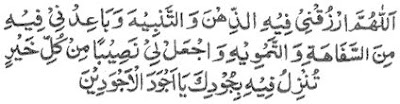
Ramadan Dua: DAY 3 |
![]() |
ALLAH, on this day, grant me wisdom and awareness, keep me away from foolishness and pretension, grant me a share in every blessing You send down, by You generosity, O the most Generous. |
Ramadan Dua: DAY 4 |
![]() |
ALLAH, on this day, strengthen me in carrying out Your commands, let me taste the sweetness of Your remembrance, grant me, through Your graciousness, that I give thanks to You. Protect me, with Your protection and cover, O the most discerning of those who see. |
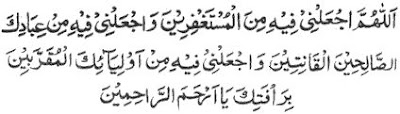
Ramadan Dua: DAY 5 |
![]() |
ALLAH, on this day, place me among those who seek forgiveness. Place me among Your righteous and obedient servants, and place me among Your close friends, by Your kindness, O the most Merciful. |
Ramadan Dua: DAY 6 |
![]() |
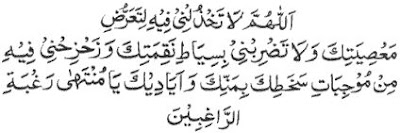
ALLAH, on this day, do not let me abase myself by incurring Your disobedience, and do not strike me with the whip of Your punishment, keep me away from the causes of Your anger, by and Your power, O the ultimate wish of those who desire. |
Ramadan Dua: DAY 7 |
ALLAH, on this day, help me with its fasts and prayers, and keep me away from mistakes and sins of the day, grant me that I remember You continuously through the day, by Your assistance, O the Guide of those who stray. |
Ramadan Dua: DAY 8 |
ALLAH, on this day, let me have mercy on the orphans, and feed [the hungry], and spread peace, and keep company with the noble-minded, O the shelter of the hopeful. |
Ramadan Dua: DAY 9 |
ALLAH, on this day, grant me a share from Your mercy which is wide, guide me towards Your shining proofs, lead me to Your all encompassing pleasure, by Your love, O the hope of the desirous. |
Ramadan Dua: DAY 10 |
![]() |
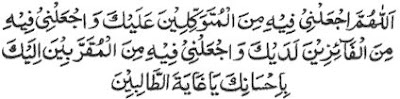
ALLAH, on this day, make me, among those who rely on You, from those who You consider successful, and place me among those who are near to you, by Your favor, O goal of the seekers. |
Ramadan Dua: DAY 11 |
ALLAH, on this day, make me love goodness, and dislike corruption and disobedience, bar me from anger and the fire [of Hell], by Your help, O the helper of those who seek help |
Ramadan Dua: DAY 12 |
![]() |
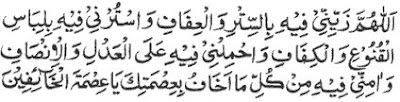
ALLAH, on this day, beautify me with covering and chastity, cover me with the clothes of contentment and chastity, let me adhere to justice and fairness, and keep me safe from all that I fear, by Your protection, O the protector of the frightened. |
Ramadan Dua: DAY 13 |
ALLAH, on this day, purify me from un-cleanliness and dirt, make me patient over events that are decreed, grant me the ability to be pious, and keep company with the good, by Your help, O the beloved of the destitute. |
Ramadan Dua: DAY 14 |
![]() |
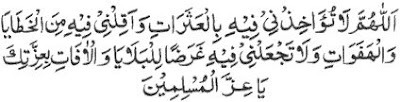
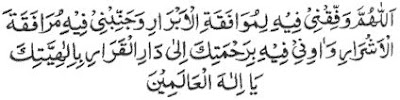
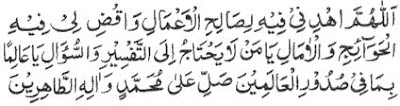
ALLAH, on this day, do not condemn me for slips, make me decrease mistakes and errors, do not make me a target for afflictions and troubles, by Your honor, O the honor of the Muslims. |
Ramadan Dua: DAY 15 | ||||
![]() | ||||
| ||||
| ||||
| ||||
| ||||
| ||||
Ramadan Dua: DAY 21 |
![]() |
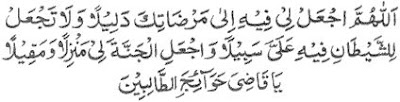
ALLAH, on this day, show me the way to win Your pleasure, do not let Shaytan have a means over me, make Paradise an abode and a resting place for me, O the One who fulfills the requests of the needy. |
Ramadan Dua: DAY 22 |
![]() |
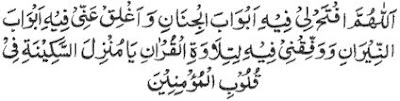
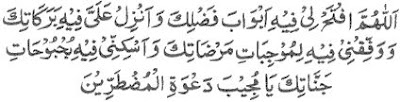
ALLAH, on this day, open for me the doors of Your Grace, send down on me its blessings, help me towards the causes of Your mercy, and give me a place in the comforts of Paradise, O the one who answers the call of the distressed. |
Ramadan Dua: DAY 23 |
ALLAH, on this day, wash away my sins, purify me from all flaws, examine my heart with (for) the piety of the hearts, O One who overlooks the shortcomings of the sinners. |
Ramadan Dua: DAY 24 |
![]() |
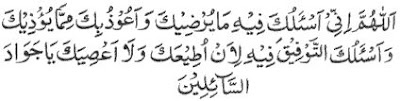
ALLAH, on this day, I ask You for what pleases You, and I seek refuge in You from what displeases You, I ask You to grant me the opportunity to obey You and not disobey You, O One who is generous with those who ask |
Ramadan Dua: DAY 25 |
ALLAH, on this day, make me among those who love Your friends, and hate Your enemies, following the way of Your last Prophet, O the Guardian of the hearts of the Prophets. |
Ramadan Dua: DAY 26 |
ALLAH, on this day, make my efforts worthy of appreciation, and my sins forgiven, my deeds accepted, my flaws concealed, O the best of those who hear. |
Ramadan Dua: DAY 27 |
![]() |
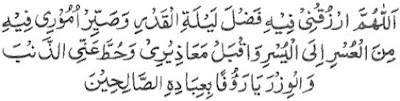
ALLAH, on this day, bestow on me the blessings of Laylatul Qadr, change my affairs from (being) difficult to (being) easy, accept my apologies, and decrease for me [my] sins and burdens, O the Compassionate with His righteous servants. |
Ramadan Dua: DAY 28 |
![]() |
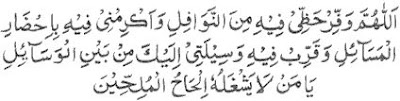
ALLAH, on this day, grant me a share in its nawafil (recommended prayers), honor me by attending to my problems, make closer the means to approach You, from all the means, O One who is not preoccupied by the requests of the beseechers. |
Ramadan Dua: DAY 29 |
![]() |
O ALLAH, on this day, cover me with Your mercy, grant me in it success and protection, purify my heart from the darkness of false accusations, O the Merciful to His believing servants. |
Ramadan Dua: DAY 30 |
![]() |
O ALLAH, on this day, make my fasts worthy of appreciation and acceptance, according to what pleases You, and pleases the Messenger, the branches being strengthened by the roots, for the sake of our leader, Muhammad, and his purified family. Praise be to ALLAH, the Lord of the worlds. |
The Message: Ramadan 2011– Maximize Your spirtuality
Ramadan (the 9th month in the Islamic Hijri calendar) is here again and more than a billion Muslims are gearing up to observe the various ibadat (worship) of this month. Although fasting is the primary highlight of this month, other Ibadat too, such as salat (prayers), Quran recitation, acts of charity, proactively striving for good deeds, etc., go hand in hand with fasting and will be the focus of everyone’s efforts.
As Muslims, the same Ibadat are at our disposal throughout the year. However, the many additional rewards associated with our worship during this month make the same Ibadat more potent. Even those with little faith and eeman in their hearts join the foray in an attempt to reinvigorate the Taqwa (piety) in their hearts, which is the primary objective of Ramadan1.
During Ramadan, Allah will be opening the gates of His mercy. He has reassured us of the immeasurable rewards of fasting that we can earn only if we rightly espouse the spirit of the month. In Ramadan, He chains the devils2 (that whisper in our heart inviting us to sins) so that we can focus on purifying our souls, which are frequently pushed toward sins. He has provided us one special night during this month, the worship in which is better than a thousand months (Quran: al-Qadar, 3). Allah has raised the reward of Umrah in Ramadan by making its reward equivalent to performing Hajj3. By providing Ifatar to a person who is fasting can get us the reward of feeding the fasting person along with the reward that we would have had for our own fasting4. He has also designated one specific gate in paradise (called ar-Rayyan) that will be used to enter paradise on the Day of Judgment only by those who had fasted5.
The list of potential rewards is quite long. However, it is noteworthy that despite all our fasting and praying, earning those rewards is not automatic and instead requires that that we appropriately engage ourselves (both physically and spiritually) in ways that Allah and His prophet have taught us. The following covers some of those topics.
1) Ensure that your fasting is only for Allah
A critical prerequisite for starting Ramadan and its Ibadat requires that we first purify our intentions. One shouldn’t fast, for example, because it is healthy to do so, or to “go with the flow.” While fasting has numerous virtues and benefits, the primary motivation of fasting should be solely to seek Allah’s pleasure. So, if your intention is tainted with other ulterior motives or you aren’t clear on your intentions, you risk foregoing the rewards of your worship. In a well known hadith the prophet had highlighted the conditions for fasting to be accepted by saying6: “Whoever fasts Ramadan out of faith and in the hope of reward, his previous sins will be forgiven.” “Out of faith” in this context refers to ensuring that your worship is solely for Allah. The Prophet (peace be upon him) said7: “Allah does not accept any deed except that which is done only for Him and to seek His Countenance.” The Prophet also said (in part of a hadith)8: “Allah, may He be blessed and exalted, says: ‘…he who does an action for someone else’s sake as well as Mine will have that action renounced by Me to him whom he associated with Me’”.
Let’s, therefore, remind ourselves that for our fasting to be accepted, it should be solely for the sake of Allah. Anything less risks non-acceptance.
2) Have the eagerness to get your fasts and worship accepted
Referring back to the popular hadith quoted earlier, the second condition for fasts being accepted (and sins forgiven) is the “hope of reward.” It is difficult to hope and wish for something without recognizing its value. So, if we indeed recognized the value of Ramadan and fasting and the associated rewards, then we should feel the eagerness in our hearts for our fasts and worships to be accepted.
Consider that the sahaba and the salaf would be so eager to have their Ibadah accepted that they would pray for up to 6 months after the completion of Ramadan asking Allah to accept their fasts and worships. Using the same standards and recalling last year’s Ramadan, make an assessment of how your heart measured up in terms of possessing that eagerness. If it is nowhere close, then it raises some questions about the value that you place on the rewards of Ramadan in your heart. After all, if the month-long worship and Ibadah that you poured in your heart failed to overwhelm you spiritually, then it’s time to correct your intentions and recognize the value of fasting before you lose that opportunity this year again. Consider Abu’l-Darda’s eagerness about the acceptance of his Ibadah when he said9: “To be certain that Allah would accept just one prayer from me would be dearer to me than the world and everything in it, for Allah says: ‘Verily, Allah accepts only from those who are al-muttaqoon (the pious)’ [al-Maa’idah 5:27].”
Remember, the eagerness for the acceptance of your worship, especially in Ramadan, is a condition for the acceptance of your worship. You can cultivate that eagerness in your heart by reminding yourself about the rewards, virtues, and benefits of Ramadan.
3) Engage intently in worship during Ramadan
This Ramadan, many of us will get involved in various Ibadat such as prayers, Quran recitation, and so on. However, more than just “busying yourself” with various Ibadat, you need to actively engage your heart to make your ibadah more meaningful. It’s no secret that a normal day’s schedule in Ramadan fills up faster than on the usual days. The worldly demands of our time along with an increase in religious activities can pack one’s day’s schedule more than on other days. However, when faced with such packed schedules and as we move from one activity to the other, we tend to merely focus on seeing those activities to completion rather than engaging more intently in those acts of worship. When we do so, we leave the spirituality out of those acts of worship and merely exercise empty rituals. As the prophet said10, “Some who fast obtain nothing from it but hunger and thirst.”
Let’s, therefore, ensure that all our acts of Ibadah during Ramadan are purposeful, absorbing, given due time, and engage our hearts to the fullest. It would indeed be a big loss if we merely earned hunger, thirst, and sleeplessness from our actions at the end of the month!
4) Renewed attitude about rewards and sins
Many of us hear about hasanat (rewards) associated with good deeds without realizing their redeeming value. The prophet said11, ‘Do not look down on any act of goodness, even if it is just emptying your bucket into the vessel of one who wants to drink, or speaking to your brother with a cheerful expression’”. Similarly, we hear about the ill effects of sins without truly comprehending how they chip away at our spiritual and worldly fortunes. The Messenger of Allah (peace be upon him) said12: “Beware of sins that are seen as insignificant, for they will keep accumulating until they destroy a man”.
Before we step into this year’s Ramadan, therefore, we should realize that hasanat (rewards) and sins are the basic currencies that will decide our fate in this life and the hereafter. The tilt of the scale that will weigh our rewards and sins on the Day of Judgment will determine our final abode. A change of attitude about this simple principle alone can go a long way in propelling our behaviors in the right direction. Ibn Mas’ood described the attitude of the believer and of the hypocrite as follows13: “The believer sees his sins as if he were sitting beneath a mountain which he fears will fall on him, whilst the sinner sees his sins as if it were a fly passing his nose and he says such-and-such to it” – i.e., he shoos it away with his hand.
Let’s, therefore, direct all our efforts to earn as many hasanat as possible and to stay away from sins. Ramadan provides us a chance of multiplied hasanat but the multiplication is all tied to the sincerity of our worships and the intensity with which we are eager to earn those rewards and erase our sins.
5) Shy away from bad practices
The spirit of the month of Ramadan is not alien to most Muslims. However, many of us erroneously engage in practices that tend to dilute the spirit of the blessed month thus preventing us from capitalizing on the month’s blessings. For example, many make Ramadan the focal point of social events rather than focusing on the worship and Ibadah. Others know Ramadan because of the opportunity to feast on a variety of meals and excessively indulging in eating and drinking. There are others who tend to get lax about the obligatory prayers (e.g. Fajr) for the sake of optional prayers such as Taraweeh and other optional Ibadahs.
Let’s remind ourselves that such practices can divert our focus thus chipping away at our spiritual energies robbing us in turn of the maximum rewards that we could potentially attain in this month. Let’s remind ourselves that since such practices were never the focus of the prophet, the sahaba, or any of their pious followers, they shouldn’t be ours either.
Parting words
With Ramadan offering a unique opportunity to earn Allah’s pleasure, what more can you ask for and what could be said about you if you didn’t make use of this opportunity? Remember that many who were with us during last year’s Ramadan didn’t live long enough to see this year’s Ramadan. As none of us knows if we would live to see next year’s Ramadan, why not make the most of it now before it is too late? Ensure that you capture as many moments of this month as you can because every moment does count. The Prophet said14: “In every day and every night, during the month of Ramadan, there are people to whom Allah grants freedom from the Fire, and there is for every Muslim a supplication which he can make and will be granted”.
Finally, during the coming month, as you plead your case to Allah to forgive your sins and to fulfill your needs, don’t forget the millions of needy Muslims around the world who are in states of distress far worse than any of us can imagine. Thousands of them die of hunger and thirst daily, while others lack the basic amenities of life, and don’t have even the least of the opportunities that many of us are blessed with. As Ramadan provides us the promise of Allah’s increased mercy, let’s plead their case also to Him.
May all of you have a blessed Ramadan of 2011! (AMEEN.SUMMA AMEEN)
Forty Hadith (Ahadith) Regarding the Month of Ramazan:
Forty Hadith (Ahadith) Regarding the Month of RamazanIntroduction:
Holy Prophet Muhammad (peace be upon him and his progeny) has said: "Those people from amongst my ummah, who memorize forty hadith (traditions) pertaining to those issues of religion, which they are in need of, Allah shall resurrect them on the Day of Judgment as jurisprudents and scholars." (Bihar al-Anwar, vol. 2, pg. 156; Al-Ikhtasaas, pg.2)
Hadith No. 01
Why the name 'Ramazan'?
Holy Prophet Muhammad (peace be upon him and his progeny) said: "Surely, the month of Ramazan has been named so because it scorches away the sins." Kanz al-Ummal, H: 23688
Hadith No. 02
Ramazan: The Name of God
Imam Sadiq (A.S.) has said: Say not, "This is Ramazan" and "Ramazan has departed" and "Ramazan has arrived" for surely, Ramazan is one of the names of Allah, The Mighty, the Glorious, who neither arrives nor departs. Surely, arrives and departs that, which is ephemeral, Instead say: "The month of Ramazan". Al-Kafi, 4, pg. 70
Hadith No. 03
Ramazan: The Month of Revelation of the Holy Quran
Imam Reza (A.S.) has said: If one asks, "Why is it that the fasts were made obligatory exclusively in the month of Ramazan and not in the other months?" it would be said, "(this is) because the month of Ramazan is the month in which Allah, the Exalted, had revealed the Holy Quran." Bihar al-Anwar, vol. 18, pg. 190
Hadith No. 04
Reward for Recitation of the Holy Quran during Ramazan
Imam Reza (A.S.) has said: "Someone who recites one verse from the Book of Allah, The Mighty, The Glorious, in the month of Ramazan, is like one who has recited the entire Holy Quran in the other months." Bihar al-Anwar, vol. 93, pg. 344
Hadith No. 05
Reward of the Month of Ramazan
Holy Prophet Muhammad (peace be upon him and his progeny) was asked: O' Prophet of Allah! Which of the two months possesses a greater reward, Rajab or the month of Ramazan? Holy Prophet Muhammad (peace be upon him and his progeny) replied: Nothing can be compared to the month of Ramazan in terms of reward. Bihar al-Anwar, vol. 97, pg. 49
Hadith No. 06
Ramazan: The Month of God
Holy Prophet Muhammad (peace be upon him and his progeny) said: Shaaban is my month and the month of Ramazan is the month of Allah, The Exalted, and it is the springtime for the poor. Bihar al-Anwar, vol. 97, pg. 68
Hadith No. 07
Ramazan: The Chosen Month
Holy Prophet Muhammad (peace be upon him and his progeny) said: Surely, Allah, The Mighty, The Glorious, has chosen from amongst the months (and granted preference to), the months of Rajab, Shaaban and the month of Ramazan. Bihar al-Anwar, vol. 27, pg. 53
Hadith No. 08
Ramazan: The Great Month
Holy Prophet Muhammad (peace be upon him and his progeny) said: Surely, the month of Ramazan is a great month. Allah multiplies in it the good deeds, erases in it the sins and elevates in it the ranks. Wasail al-Shia'h, vol. 10, pg. 312
Hadith No. 09
Ramazan: The Chief of the Months
Imam Ali (A.S.) said: The month of Ramazan has approached you. It is the chief of all months and the beginning of the year. Bihar al-Anwar, vol. 42, pg. 193
Holy Prophet Muhammad (peace be upon him and his progeny)Hadith No. 10
Ramazan: The Beginning of the Year
Imam Sadiq (A.S.) said: If the month of Ramazan remains safe and sound (with respect to sins), the (entire) year shall remain so (too); the month of Ramazan is the beginning of the year. Wasail al-Shia'h vol.10, pg. 311
Hadith No. 11
Ramazan: The Month of Mercy
Holy Prophet Muhammad (peace be upon him and his progeny) has said: It (Ramazan) is the month, whose beginning is mercy, its middle, forgiveness and its end, emancipation from the fire (of hell). Bihar al-Anwar, vol. 93, pg. 342
Hadith No. 12
Excellence of the Month of Ramazan
Holy Prophet Muhammad (peace be upon him and his progeny) said: O' People! Surely, the month of God has approached you. The month which, in the eyes of Allah, is the most virtuous of the months. Its days are the best of the days and its nights, the best of the nights and its moments, the best of the moments. Bihar al-Anwar, vol. 96, pg. 356
Hadith No. 13
Ramazan: The Best of the Months
Imam Sadiq (A.S.) said: The best of the months is the month of God - the month of Ramazan - and the heart of the month of Ramazan is the Night of Qadr (Lailatul Qadr). Bihar al-Anwar, vol. pg. 386
Hadith No. 14
The Night of Qadr
Holy Prophet Muhammad (peace be upon him and his progeny) said: O' People! Surely, a great and blessed month has enveloped you. A month, in which there is a night, deeds in which are better than of a thousand months. Bihar al-Anwar, vol.96, pg. 342
Hadith No. 15
Gift of Allah's Month
Holy Prophet Muhammad (peace be upon him and his progeny) said: Your breath in it glorification (of Allah) and your sleep in it worship (of Allah). Bihar al-Anwar, vol. 96, pg. 356
Hadith No. 16
Fasts of the Month of Ramadan
Holy Prophet Muhammad (peace be upon him and his progeny) said: The month of Ramazan is the month in which Allah, The Mighty, The Glorious, has made fasting obligatory upon you. So one, who fasts in this month in a state of belief and with the intention of recompense, shall become free of his sins just as he was on the day when his mother gave him birth. Tahdheeb al-Ahkam, vol. 4, pg. 152
Hadith No. 17
Ramazan: The Month of Spiritual Striving
In his testament to his sons, Imam Sadiq (A.S.) said: When the month of Ramazan arrives, exert yourselves, for surely it is in this month that livelihood is distributed, the hour of death is ordained and the arriving for Hajj is decreed. In it is a night, deeds in which are better than deeds in a thousand months. Al-Kafi, vol. 4, pg. 66
Hadith No. 18
Ramazan: The Month of Good Deeds
Holy Prophet Muhammad (peace be upon him and his progeny) said: This month of yours (Ramazan) is unlike the other months. Surely, when it approaches you, it does so with blessings and mercy and when it turns away from you, it does so with forgiveness of sins. This is a month in which good deeds are multiplied and of goodness accepted. Wasail al-Shia'h, vol. 10, pg. 312
Hadith No. 19
Ramazan: The Blessed Month
Holy Prophet Muhammad (peace be upon him and his progeny) has said: Surely, the month of Ramazan, the blessed month, has come to you. The month, whose fasts Allah has made obligatory upon you. In it, the doors of Paradise are opened up and the Satan's fettered, and in it is the Night of Qadr, which is more virtuous than a thousand months. Tahdheeb al-Ahkam, vol. 4, pg. 152
Hadith No. 20
The Month of Ramazan and Seeking Forgiveness
Imam Ali (A.S.) said: It is incumbent upon you to seek forgiveness and supplicate excessively in the month of Ramazan. As for the supplication, by means of it the calamities are warded off from you, and as for the seeking of forgiveness, it erases away your sins. Al-Kafi, vol. 4, pg. 88
Hadith No. 21
Opening of the doors of Paradise
Holy Prophet Muhammad (peace be upon him and his progeny) said: In it (the month of Ramazan) the doors of Hell are closed and the doors of Paradise opened. Bihar al-Anwar, vol. 96, pg. 363
Hadith No. 22
The Month of Ramazan and Itikaf
Imam Sadiq (A.S.) has said: Holy Prophet Muhammad (peace be upon him and his progeny), initially observed the Itikaf (spiritual retreat) during the first ten days of the month of Ramazan. Later, he observed it during the middle ten days of the holy month and finally, he observed it during the last 10 days of the month and then continued to do so in the last ten days (for as long as he was alive). Bihar al-Anwar, vol. 16, pg. 274
Hadith No. 23
The Month of Ramazan and Divine Books
Imam Sadiq (A.S.) said: The Torah was revealed on the sixth day of the month of Ramazan, the Bible, on the twelfth night of the month, the Paslms on the eighteenth night of the month and the Quran on the Night of Qadr. Al-Kafi, vol. 4, pg. 157
Hadith No. 24
The Best Deed of the Month of Ramazan
During the course of a sermon of Holy Prophet Muhammad (peace be upon him and his progeny) about the virtues of the month of Ramazan. Imam Ali (A.S.) says: I stood up and asked: O' Prophet of Allah! What is the best deed for this month? Holy Prophet Muhammad (peace be upon him and his progeny) replied: O' Abul-Hasan! The best deed for this month is abstinence from that which is forbidden by Allah, The Mighty, The Glorious. Bihar al-Anwar, vol. 42, pg. 190
Month of Ramazan Hadith (Ahadith)Hadith No. 25
Losers of the Month of Ramazan
Holy Prophet Muhammad (peace be upon him and his progeny) said: One who perceives the month of Ramazan and (does not strive in it and hence) is not forgiven, Allah distances him from Himself. Bihar al-Anwar, vol. 74, pg. 74
Hadith No. 26
Imam Sajjad (A.S.) and the Month of Ramazan
Imam Sadiq (A.S.) said: With the advent of the month of Ramazan, Imam Ali Ibn al-Hussain (A.S.) would cease to speak about anything except dua, tasbeeh (glorification of Allah), isteghfar (seeking forgiveness) and takbeer (saying 'Allahu Akbar'). Al-Kafi, vol. 4, pg. 88
Hadith No. 27
Fridays of the Month of Ramazan
Imam Baqir (A.S.) has said: Surely, the Fridays of the month of Ramazan possess an excellence over the Fridays of the other months, just as Holy Prophet Muhammad (peace be upon him and his progeny) possesses an excellence over the other prophets. Bihar al-Anwar, vol. 69, pg. 376
Hadith No. 28
Seven Excellences of Ramazan Fasting
Holy Prophet Muhammad (peace be upon him and his progeny) has stated: There is no Mu'min, who fasts for a day in the month of Ramazan with the intention of attaining its rewards, except that Allah, The Exalted, grants him seven excellences:
The forbidden food that had entered into his body melts away.
He moves closer to the Mercy of Allah, The Exalted.
Allah expiates his sins.
Allah reduces for him the agony of death.
Allah protects him from the hunger and thirst of the Day of Judgment.
He is granted pardon from the fire (of Hell).
Allah provides him the good and pleasant food of Paradise.
Mustadrak al-Wasaail al-Shia'h, vol. 7, pg. 395
Hadith No. 29
Ramazan: The Month of Patience
Holy Prophet Muhammad (peace be upon him and his progeny) said: And it (the month of Ramazan) is the month of patience, and surely, the reward of patience is Paradise. Al-Kafi, vol. 4, pg. 66
Hadith No. 30
Giving Charity
Imam Sadiq (A.S.) has said: Allah shall ward off 70 kinds of calamities from one who gives charity in the month of Ramazan. Wasaail al-Shia'h, vol. 9, pg. 404
Hadith No. 31
Reward of an Obligatory Act
Holy Prophet Muhammad (peace be upon him and his progeny) has stated: (The rewards of) one, who performs in it (the month of Ramazan) a single act from amongst the obligatory (wajib) acts of Allah, would be like (that of) one, who has performed seventy obligatory acts in the other months. Wasaail al-Shia'h, vol. 10, pg. 307
Hadith No. 32
Night of Decree
Imam Baqir (A.S.) said: In the Night of Qadr is decreed every thing - pleasant and unpleasant, obedience and disobedience, birth and death, and livelihood - which would occur during the course of that year, till the next Night of Qadr. Al-Kafi, vol. 4, pg. 157
Hadith No. 33
Increase Prayers in the Month of Ramazan
Imam Sadiq (A.S.) has said: With the advent of the month of Ramazan, the Messenger of Allah (peace be upon him and his progeny) would increase his Prayers (Salaat); I also increase mine and so, (you) increase yours (too). Tahdheeb al-Akhaam, vol. 3, pg. 60
Hadith No. 34
Eating of sahur
Holy Prophet Muhammad (peace be upon him and his progeny) has said: Eat your 'sahur' (the morning meal before the start of a fast) even if it is (mere) mouthfuls of water, for the blessings of Allah are upon those who eat the sahur. Tahdheeb al-Akhaam, vol. 4, pg. 198
Ramazan: Forty Hadith (Ahadith)Hadith No. 35
Hunger and Thirst of the Day of Judgment
Imam Ali (A.S.) said: Bring to mind, by means of your hunger and thirst in it (the month of Ramazan), the hunger and thirst of the Day of Judgment. Bihar al-Anwar, vol. 93, pg. 356
Hadith No. 36
The Call of Allah
Abdullah Ibn al-Abbas Ibn Abd al-Muttalib reports that he heard Holy Prophet Muhammad (peace be upon him and his progeny) say: Every night, in the month of Ramazan, Allah, The Blessed and The Exalted, calls out three times: Is there one, who seeks from Me, so that I grant him his wish? Is there one, who turns to me in repentance so that I turn to him (in Mercy)? Is there one, who seeks forgiveness from Me so that I forgive him? Mustadrak al-Wasaail, vol. 7, pg. 429
Hadith No. 37
Ghusl (ablution) on Night of Qadr
Imam Musa Ibn Ja'far (A.S.) said: One, who performs the ghusl on the Night of Qadr and remains awake in it (engaged in worship), shall have all his sins forgiven. Wasaail al-Shia'h, vol. 10, pg. 358
Hadith No. 38
Shield of a Believing Servant
Allah, The Mighty and The Glorious has said: The fasts are the shield of the believing servants on the Day of Judgment, just as your weapons shield you in this world. Wasaail al-Shia'h, vol.10, pg. 403
Hadith No. 39
Iftaar for Mu'min
Holy Prophet Muhammad (peace be upon him and his progeny) said: One who provides iftaar to a Mu'min in the month of Ramazan, shall be granted the reward of liberating a slave (in the path of Allah) and shall have all his previous sins forgiven. And if he did not possess the means to present anything except milk mixed with water, or a drink of sweet water and a date, Allah would grant him this reward. Bihar al-Anwar, vol. 93, pg. 317
Hadith No. 40
Farewell to the Month of Ramazan
Holy Prophet Muhammad (peace be upon him and his progeny) prayed: O' God! Ordain not this month of Ramazan to be the last one for my fasts. But should you ordain it to be so, then make me blessed and leave me not deprived (of Your mercy). Badaabi Az Quran, pg. 398